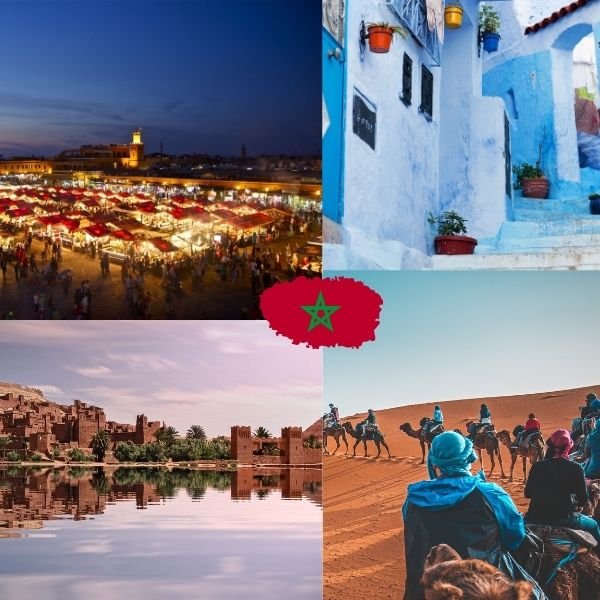
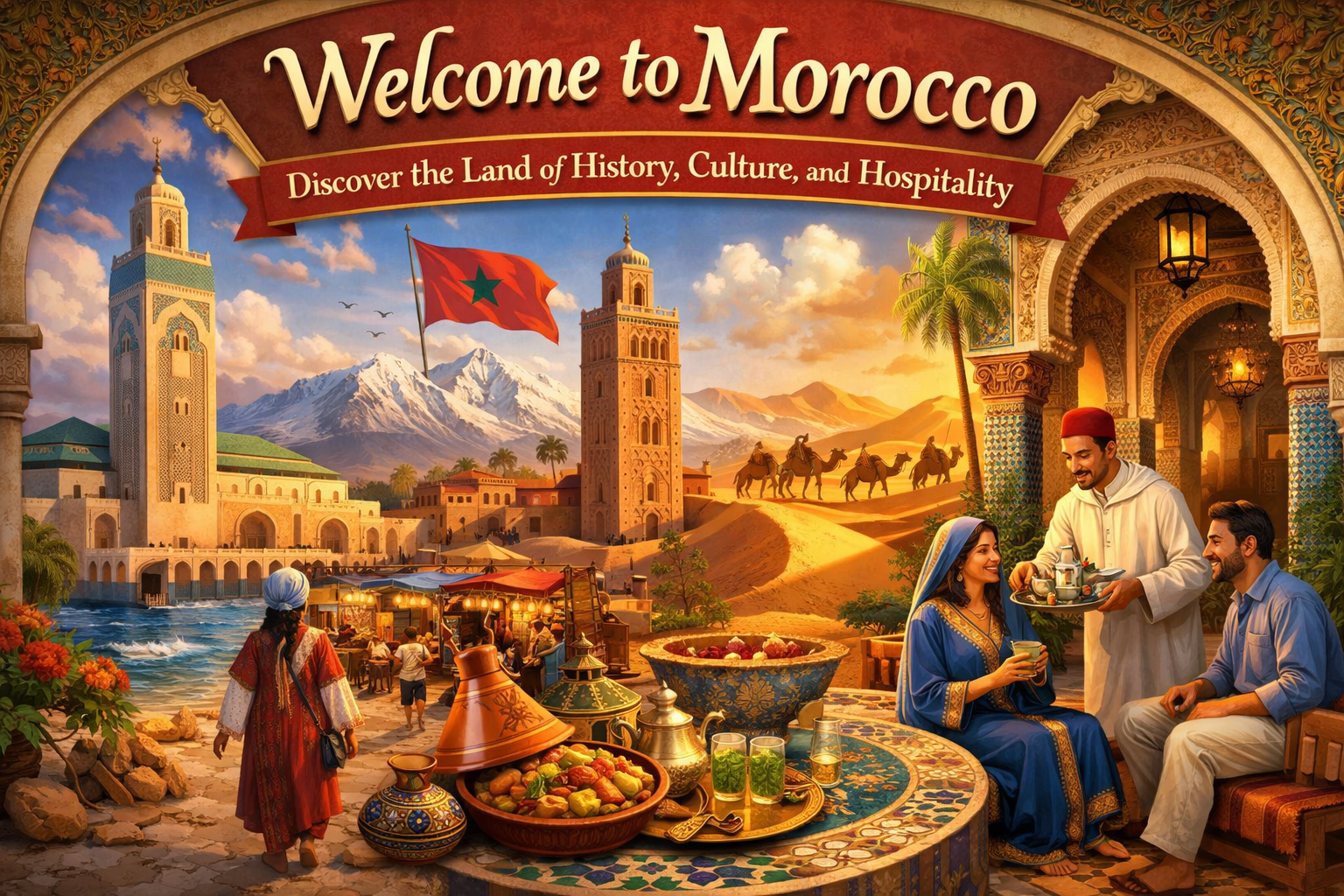
Discover a Land of History, Diversity, and Timeless Hospitality
When someone says “Welcome to Morocco”, it is far more than a simple greeting. It is an invitation to explore a country rich in culture, deeply rooted in history, and open to the world. Morocco is not merely a travel destination; it is a sensory journey of colors, smells, sounds, and stories that weave together centuries of civilizations, creating a unique harmony between tradition and modernity.
From the moment you arrive, you will notice the warmth of the people and the generosity embedded in Moroccan culture. In Morocco, traveling is not just about moving from one place to another—it is an immersive human experience that engages every sense and leaves memories that last a lifetime.
Morocco: A Strategic Location with a Rich Historical Identity
Morocco is located in the northwest corner of Africa, bordered by the Mediterranean Sea to the north and the Atlantic Ocean to the west. This strategic position has historically made it a crossroads between Africa, Europe, and the Arab world, serving as a hub for commerce, diplomacy, and cultural exchange for millennia.
The country’s history reflects the succession of multiple civilizations, from the indigenous Amazigh (Berbers), to Phoenicians, Romans, Islamic conquerors, Andalusians, and modern influences. Despite this diversity, Morocco has maintained a strong national identity and political continuity, making it one of the oldest sovereign nations with uninterrupted history.
Exceptional Geographic Diversity
Morocco’s geography is as diverse as it is breathtaking, offering natural landscapes that cater to every type of traveler:
- The Atlas Mountains: Spanning central Morocco, they host the highest peak in North Africa, Mount Toubkal, attracting hikers, climbers, and winter sports enthusiasts.
- The Sahara Desert: Southern Morocco extends into the Sahara, with vast golden dunes, starry skies, and the serenity of endless desert landscapes.
- Oases: Lush pockets of greenery in otherwise arid regions demonstrate Morocco’s unique human-nature harmony.
- Coastlines: Over 3,500 kilometers of coastline along both the Atlantic and Mediterranean provide perfect locations for swimming, surfing, and relaxation.
This geographic variety allows Morocco to offer a wide range of activities, from trekking and desert safaris to eco-tourism and coastal leisure.
Moroccan Cities: A Story in Every Corner
Marrakech: The Red City
Marrakech is one of the most famous cities in Morocco, renowned for its bustling Djemaa el-Fna square, vibrant souks, historic palaces, and lush gardens. Known as the “Red City” for the color of its buildings, Marrakech perfectly blends lively city life with rich cultural heritage.
Fez: The Spiritual and Intellectual Capital
Fez is one of the oldest cities in the Arab world and home to the University of Al-Qarawiyyin, the oldest operating university globally. Its medina is a UNESCO World Heritage site, reflecting centuries of scholarship, spirituality, and artisanal craftsmanship.
Rabat: The Capital of Balance
Rabat, Morocco’s political capital, combines elegance, modern infrastructure, and historical monuments like the Hassan Tower and the Kasbah of the Udayas. It exemplifies the harmony between tradition and contemporary life.
Casablanca: Economic Heartbeat
Casablanca is the largest city and economic powerhouse of Morocco. Its skyline reflects modernity, while landmarks like the Hassan II Mosque illustrate the country’s architectural prowess and cultural openness.
Tangier and Chefchaouen
Tangier, with its international influence and artistic heritage, has inspired writers and travelers for centuries. Chefchaouen, the “Blue City,” enchants visitors with its vivid streets, tranquility, and perfect photographic opportunities.
Moroccan Culture: A Rich Mosaic
Moroccan culture is a result of centuries of intercultural exchange. It is deeply visible in daily life and includes:
- Languages: Arabic and Amazigh are official languages, while French, Spanish, and English are widely spoken.
- Traditional Clothing: From the flowing djellaba to the elegant caftan, attire varies across regions, reflecting local heritage.
- Music: Styles range from Andalusian classical music to Gnawa rhythms, Ahwash folk, and contemporary Moroccan fusion.
- Craftsmanship: From pottery and carpets to intricate woodwork and tile mosaics, Moroccan artisanry is renowned worldwide.
This diversity creates a living cultural tapestry that is both dynamic and deeply rooted in history.
Moroccan Cuisine: A Symphony of Flavors
Moroccan cuisine is celebrated globally for its complexity and balance of flavors. Culinary tradition here is not just about eating—it is a ritual of hospitality, community, and celebration.
Signature dishes include:
- Couscous – often served with vegetables and meat, a staple of Moroccan tables.
- Tagine – slow-cooked stews named after the earthenware pot in which they are prepared.
- Pastilla (Bastilla) – a sweet and savory pie often made with pigeon or chicken.
- Harira – a hearty soup traditionally served during Ramadan.
- Mint Tea – the iconic drink, symbolizing Moroccan hospitality.
Dining in Morocco is an experience that engages all senses, from aromatic spices to the visual beauty of the dishes.
Moroccan Hospitality: A Core Value
Hospitality is not a mere custom in Morocco—it is a core aspect of social life. Guests are welcomed warmly, whether in urban homes, remote villages, or luxury accommodations. Moroccan hospitality emphasizes respect, generosity, and human connection, making every visitor feel valued and safe.
Tourism in Morocco: A Comprehensive Experience
Morocco’s tourism sector offers a wide range of experiences:
- Luxury resorts and boutique hotels
- Traditional riads and guesthouses
- Desert and mountain excursions
- Cultural and spiritual tourism
Sustainable tourism initiatives are increasingly emphasized, preserving the natural environment and cultural heritage while enhancing visitor experiences.
Modern Morocco: Tradition Meets Innovation
Morocco has undergone significant development in infrastructure, transportation, renewable energy, and digital economy. Despite this progress, the country remains committed to preserving its cultural heritage, creating a unique balance between the past and the future. Morocco’s modern cities, high-speed trains, and eco-friendly resorts exemplify this integration of tradition and modernity.
Why Morocco Leaves a Lasting Impression
Visitors often leave Morocco not only with memories of stunning landscapes and historic architecture but also with the intangible warmth of the Moroccan people. The country’s ability to merge history, nature, culture, and hospitality creates a holistic travel experience rarely found elsewhere.
Whether you seek knowledge, adventure, relaxation, or human connection, Morocco offers it all. Welcome to Morocco is more than a phrase—it is an invitation to immerse yourself fully in a land that welcomes everyone with open arms.
Welcome to Morocco
Morocco is a destination that captivates the heart and mind. From the golden sands of the Sahara to the snowy peaks of the Atlas Mountains, from vibrant medinas to modern urban centers, the country offers something for every traveler. Its culture, cuisine, and people ensure that every visit is memorable and transformative.
In Morocco, every journey is a story waiting to be told, and every traveler becomes part of its enduring legacy. Welcome to Morocco—where your adventure begins and memories last forever.